Keynotes
Keynote Speaker: Gérard G. Medioni, VP & Distinguished Scientist, Amazon.com

Title: "Prime Video: Delivering High Quality Streaming"
Abstract: Gerard Medioni will present an exploration of the cutting-edge technology driving the Prime Video experience. The session opens with three flagship innovations: AI-aided dubbing, video season recaps, and a newly launched NBA feature — each showcasing how Prime Video is pushing the boundaries of content delivery and personalization. Gerard will then take a deeper dive into three areas of active technical development: the challenges and solutions behind delivering streaming video in vertical format for mobile audiences; Prime Video's approach to detecting and classifying audio quality defects; and the unique image quality challenges inherent to livestreaming — and how the team is tackling them.
Bio: Gérard G. Medioni is a computer scientist, author, academic and inventor. He is a vice president and distinguished scientist at Amazon and serves as emeritus professor of Computer Science at the University of Southern California. Medioni has made contributions to computer vision, in particular 3D sensing, surface reconstruction, and object modelling. He has translated his computer vision research into customer-facing inventions and products. He has authored four books, including Emerging Topics in Computer Vision, Multimedia Systems: Algorithms, Standards, and Industry Practices, and A Computational Framework for Segmentation and Grouping, and has published more than 80 journal papers, 200 conference papers, with over 34,000 citations and his h-index is 88. In addition, he holds 123 patents to his name which include Visual tracking in video images in unconstrained environments by exploiting on-the-fly context using supporters and distracters and Depth mapping based on pattern matching and stereoscopic information, along with patents on Just Walk Out technology and Amazon One. Medioni is a Fellow of the Association for the Advancement of Artificial Intelligence, the Institute of Electrical and Electronics Engineers, the International Association for Pattern Recognition, and the National Academy of Inventors. He is also a member of National Academy of Engineering.
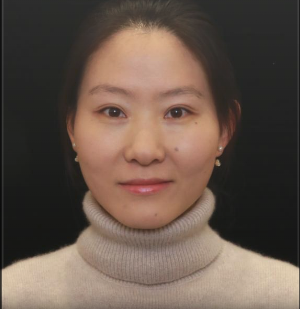
Keynote Speaker: Sarah Ostadabbas, Associate Professor, College of Engineering, Northeastern University

Title: "Toward Data-Efficient Dynamically-Aware Visual Intelligence"
Abstract: Despite rapid advances in multimodal foundation models, today's video AI systems still struggle to reason about motion, causality, and physical change, especially in real-world, small-data environments. This talk argues that scaling data and parameters alone yields models that reproduce appearance, but fail to anticipate how the world evolves. Instead, I advocate for a shift toward motion-grounded visual intelligence, where dynamics (not static frames or language priors) form the core representation. I will present recent work from our lab demonstrating how motion provides a low-dimensional bridge between pixels and physics, enabling systems that discover, describe, and generate video through dynamics-aware reasoning. Using examples from our motion-aware zero-prompt video understanding and our physics-grounded generative framework, I show how treating video as a learnable world model, rather than a sequence of images, supports more robust generalization, interpretable reasoning, and physically consistent generation. The talk concludes with a broader vision for Physical AI: data-efficient systems that learn from motion, reason over future states, and operate safely in unconstrained environments such as healthcare, robotics, and human-centered applications.
Bio: Professor Ostadabbas is an associate professor in the Electrical and Computer Engineering Department at Northeastern University (NU) in Boston, Massachusetts, USA. She joined NU in 2016 after completing her post-doctoral research at Georgia Tech, following the achievement of her PhD at the University of Texas at Dallas in 2014. At NU, Professor Ostadabbas holds the roles of Director at the Augmented Cognition Laboratory (ACLab), Director of Women in Engineering (WIE), and Co-Director at The Center for Signal Processing, Imaging, Reasoning, and Learning (SPIRAL). Her research focuses on the convergence of computer vision and machine learning, particularly emphasizing representation learning in visual perception problems. In her applied research, she has significantly contributed to the understanding, detection, and prediction of human and animal behaviors through the modeling of visual motion, considering various biomechanical factors. Professor Ostadabbas also extends her work to the Small Data Domain, including applications in medical and military fields, where data collection and labeling are costly and protected by strict privacy laws. Her solutions involve deep learning frameworks that operate effectively with limited labeled training data, incorporate domain knowledge for prior learning and synthetic data augmentation, and enhance the generalization of learning across domains by acquiring invariant representations. Professor Ostadabbas has co-authored over 130 peer-reviewed journal and conference articles and received research awards from prestigious institutions such as the National Science Foundation (NSF), Department of Defense (DoD), Sony, Mathworks, Amazon AWS, Verizon, Oracle, Biogen, and NVIDIA. She has been honored with the NSF CAREER Award (2022), Sony Faculty Innovation Award (2023), was the runner-up for the Oracle Excellence Award (2023), and One of the 120+ Women Spearheading Advances in Visual Tech and AI Recognized by LDV Capital (2024). She served in the organization committees of many workshops in renowned conferences (such as CVPR, ECCV, ICCV, ICIP, ICCASP, BioCAS, CHASE, ICHI) in various roles including Lead/Co-Lead Organizer, Program Chair, Board Member, Publicity Co-Chair, Session Chair, Technical Committee, and Mentor.